Sleep surfaces · Materials and construction
Inside an Organic Latex Bed: How Layers Shape Feel and Support
An organic latex bed is not a single material doing a single job. Its feel emerges from the arrangement of latex, wool, cotton, and the support beneath them: a small architecture of cushioning and resistance that determines whether a bed feels buoyant, yielding, firm, or somewhere less easily named.
Published November 15, 2026
Mattress descriptions tend to invite a certain simplification. A bed is called soft or firm, cooling or warm, supportive or plush, as if one adjective could account for the nightly experience of a whole body settling into a layered object. Organic latex beds resist that shorthand. Their construction may include a latex core, one or more comfort layers, wool for cushioning or moisture management, and a cotton cover. The order, thickness, density, and fastening of those parts help determine how the surface responds.
That matters because “natural” is a description of materials, not a promise of one particular sensation. Two beds made with organic latex can feel notably different. One might have a relatively thin latex layer over a firm core; another might add wool above and below a softer latex section. A third could use a single, substantial latex core wrapped in wool and cotton. Each arrangement creates a different route from the first touch of the sheet to the deeper support of the bed.
Understanding those layers is useful whether you are comparing a complete organic latex bed or considering a topper to alter an existing mattress. Instead of relying on broad claims, look at what each layer does, how much of it is present, and how the maker recommends caring for it. The result is a more grounded comparison—less a hunt for the universally “best” mattress than an effort to find a construction compatible with your preferences and setup.
The feel begins at the surface
The first sensation comes from the cover and the materials immediately beneath it. Cotton is often used as a fabric layer because it can feel soft and breathable, while wool may add a gently padded surface. A quilted cover can also change the way the uppermost layers meet the body. These details are easy to overlook in a specification list, but they are the part of the construction you encounter first.
Wool is used in some natural beds as a cushioning and moisture-managing layer. Its springy fibers can give the surface a little loft without the slow, enveloping sensation associated with some other kinds of cushioning. How pronounced that effect feels depends on the quantity of wool, how it is processed, and whether it is quilted or otherwise secured. Wool is not a substitute for the structural work of a mattress core; it is one element in the comfort system.
Cotton, meanwhile, can serve as the outer fabric or as part of the cover assembly. A sateen weave and a knit fabric may feel different in the hand, but neither tells the whole story about the mattress beneath. Covers can affect surface texture and drape; they do not, by themselves, establish how much support a bed provides. When comparing organic sleep surfaces, it helps to distinguish the tactile impression of the cover from the deeper response of the latex.
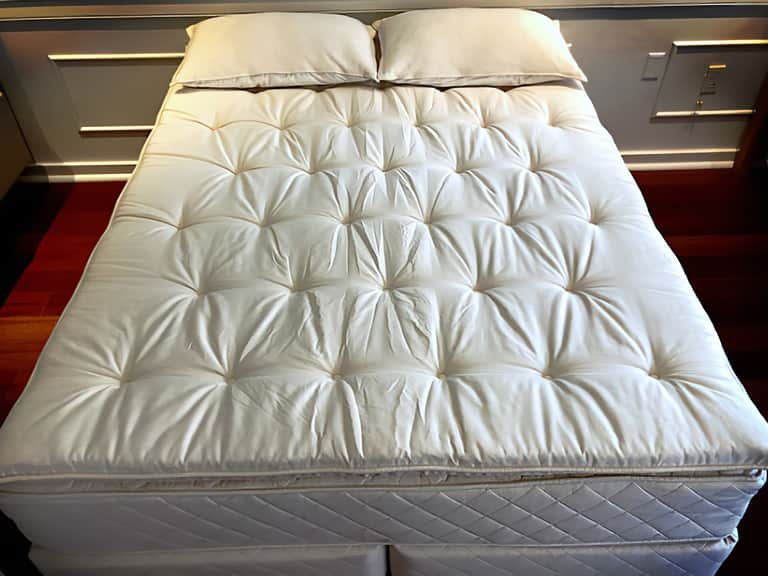
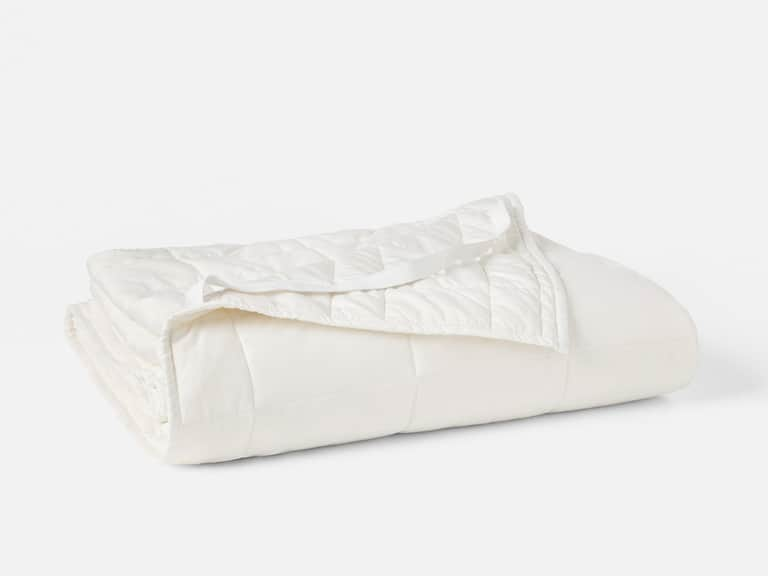
These distinctions become clearer in a topper. A wool-and-latex topper adds material above the existing mattress, changing the feel at the point of contact while leaving the original support system underneath. The Naturally Organic Hudson Organic Mattress Topper, for example, is described as a two-inch layer of organic latex between organic wool, finished in organic cotton sateen. That construction illustrates how several materials can contribute distinct qualities within one compact layer; the effect, in practice, will also depend on the mattress below it.
Latex: buoyancy, contour, and resistance
Latex is valued in mattress construction for its resilient response. When pressure is applied, it compresses; when that pressure eases, it tends to recover its shape. This quality is often described as buoyant or springy. It can allow the body to settle into a surface without producing the same slow, sinking sensation some sleepers associate with less responsive materials.
But “latex” alone does not specify a feel. The firmness of the latex, its thickness, and its position within the mattress all matter. A softer upper layer may compress more readily at the shoulders or hips, while a firmer layer underneath can limit how far the body settles. If the mattress uses one firm latex core rather than several layers with different characteristics, its feel will reflect that simpler arrangement. There is no universal formula: proportions and construction are part of the design.
Latex firmness is sometimes reported using an indentation load deflection value, or ILD. In broad terms, the figure describes the force required to compress a sample by a specified amount under a testing method. It can be a useful comparison point when specifications are reported consistently, but it is not a complete forecast of personal comfort. The size and shape of a sleeper, the mattress’s overall thickness, the bed frame, and the materials stacked above the latex all influence the experience.
Nor does a label such as “medium” necessarily mean the same thing across manufacturers. Firmness descriptions are useful as a rough guide, not as a standardized promise. When available, look for the actual material specifications and ask how the manufacturer defines its comfort terms. If you can test a mattress, notice not only the initial softness but also whether you feel supported after several minutes in your usual sleep position.
Layer order is a design decision
In a layered bed, position is function. A comfort layer nearer the top meets the body first and can provide more immediate contouring. A firmer layer below may act as a limit to compression, helping the surface feel steadier. The core, typically the deepest substantial component, contributes much of the mattress’s underlying support. A bed can therefore feel soft at the surface and still have a comparatively firm foundation—or feel uniformly firm if its upper layers are thin and resilient.
Wool’s position also changes its contribution. Used above the latex, it creates a buffer between the sleeper and the latex surface. Incorporated around a latex core, it can be part of the mattress’s overall enclosure and cushioning. Cotton may form the cover, while quilting can hold materials in place. The key is to read a construction description as an arrangement, not as a list of attractive ingredients.
Thickness is another part of the equation. A deeper comfort layer generally gives more room for compression before the firmer materials below become more noticeable, though firmness and density remain important. A relatively thin topper can make an existing mattress feel more cushioned, but it cannot entirely transform a worn or unsuitable support base. Likewise, a thick layer does not automatically mean a mattress is soft: a firm material can remain firm at greater thickness.
One example of a simpler construction is a mattress built around a single latex core, wrapped in wool and cotton. A product description for an organic latex mattress in the site’s bedding collection lists a six-inch latex core, felted wool, and organic cotton fabric. That kind of specification makes the basic architecture easier to see, but the listed materials alone cannot determine how every sleeper will experience it. The actual feel depends on firmness, body characteristics, the foundation, and the way the complete mattress is assembled.
Firmness is personal—and positional
How a bed feels depends partly on how a person meets it. A side sleeper’s shoulders and hips press into a narrower area of the surface than a back sleeper’s body may. Some side sleepers therefore prefer more surface give, while some back sleepers look for a steadier feeling through the middle of the body. Stomach sleepers may also find that a surface with too much give does not suit their preference. These are tendencies, not rules, and comfort varies from one person to another.
Body weight and shape affect how deeply a person compresses a given layer. A mattress that feels firm to one sleeper may feel more yielding to another. That is one reason a firmness rating should be treated as a starting point rather than a verdict. If two people share a bed, their preferences may diverge, making the balance between cushioning and support particularly important.
It can help to consider the sensation you want to change. If the mattress feels too hard at the shoulders, a softer upper layer may be relevant. If it feels unstable or too yielding overall, adding plushness on top may not address the underlying issue. A topper can adjust the surface, but it cannot replace the role of a sound mattress core or a suitable foundation.
When testing a mattress, give your body time to settle in a normal sleep position. Notice pressure at the shoulders, hips, or knees, and pay attention to whether the surface feels supportive rather than merely soft. For an online comparison, look past a single firmness word and record the layer thicknesses, material details, and any available firmness measurements. These facts will not tell you exactly how you will sleep, but they make comparisons more meaningful.
Temperature comfort is more than a material claim
People often look to wool, cotton, and latex when they want a bed made with natural materials and a comfortable sleep climate. These materials can play a role in how moisture and heat are managed, but they do not guarantee that a mattress will feel cool to every sleeper. Temperature comfort is affected by the entire setup: the mattress, sheets, blankets, room conditions, clothing, and individual sensitivity.
Wool is commonly valued for its ability to take up and release moisture. Cotton is often chosen for its familiar, breathable feel. Latex’s resilient structure contributes a different kind of response from a slow-compressing foam. Still, a thick cover, a tightly fitted protector, heavy bedding, or a warm room may alter the experience. The sensible approach is to regard material descriptions as useful information, not a promise of a particular body temperature through the night.
If you are often too warm, consider the whole sleep environment before assuming the mattress is the sole cause. Lightweight bedding, a comfortable room temperature, and suitable sleepwear may matter as much as the choice of topper. A mattress protector can be useful for hygiene and spill protection, but its construction may affect the surface feel, so check what it is made of and how it fits.
What “organic” tells you—and what it doesn’t
“Organic” can describe the sourcing or certification status of particular materials; it does not describe how a mattress feels. A product may combine certified organic latex with wool and cotton, but the resulting comfort still depends on the design and proportions. It is worth checking which components are certified, what standard applies, and whether a claim refers to the complete product or to a specific material within it.
Certifications can help make sourcing and production claims more legible, but they are not interchangeable with a comfort rating or a medical claim. A certification may address agricultural practices, processing, or particular environmental and chemical criteria. It does not establish that a mattress is right for a particular sleeper, nor does it mean that every part of a finished product has the same certification status.
Read labels and product information carefully. Look for named materials, their locations in the mattress, and the specific certification attached to each one. If the description uses broad phrases such as “natural” without giving material details, ask for clarification. Clear information makes it easier to compare organic latex beds without treating a reassuring word as a substitute for construction facts.
Care is part of the construction
Natural materials may require more careful handling than a washable cover or protector suggests. Before buying, check whether the mattress cover is removable, whether the mattress itself can be turned or rotated, and what the manufacturer says about spot cleaning. “Easy care” is not a universal property of organic materials; instructions differ from one design to another.
Some latex-and-wool toppers are not intended to be washed. Their care instructions may recommend using only a small amount of mild soap and water for a spot, then allowing the item to air dry. A product may also need to be kept away from direct sunlight and heat, protected from getting wet, and rotated or flipped periodically. Other wool-filled products may be designed for machine washing. The material name alone does not tell you which care routine applies: follow the specific label.
A mattress protector can help reduce exposure to spills, perspiration, and everyday wear. Choose one that fits the mattress depth and does not bunch or shift. If maintaining the original feel is important, consider how thick or padded the protector is, since any layer between the sleeper and mattress can affect the surface. Bedding care instructions matter too: washing at the recommended temperature and drying appropriately can help preserve the textile’s fit and texture.
Foundations deserve attention as well. A mattress may require a stable, appropriately spaced support system and adequate airflow beneath it. Follow the maker’s requirements rather than assuming any frame will do. A suitable base helps the mattress remain level and makes the construction perform as intended; an unsuitable one can change how the surface feels and may affect longevity or warranty coverage.
A practical comparison checklist
When comparing organic latex beds, it is easy to be distracted by a long list of virtues. A more useful method is to ask the same questions of every construction and record the answers. The goal is not to reduce comfort to a spreadsheet, but to make sure that key differences do not disappear beneath similar-sounding descriptions.
- What is in each layer? Identify the latex, wool, cotton, and any other materials, including the cover.
- Where is each material placed? Note what sits at the surface, what provides cushioning, and what forms the deeper support.
- How thick are the layers? Thickness can help explain how much room there is for compression, though it is not a firmness score by itself.
- What firmness information is available? Record the maker’s terminology and any measurements, while remembering that ratings are not universally standardized.
- What certifications apply? Check which materials are certified and what the certification actually covers.
- How is the mattress maintained? Review cleaning, rotation, turning, protector, and foundation instructions before purchase.
- What problem are you trying to solve? Distinguish a surface that feels too hard from a mattress that lacks adequate support or has reached the end of its useful life.
This checklist also helps when considering a topper. A latex-and-wool topper may add cushioning and change the feel of the surface, but its effect depends on the mattress underneath. A plush topper cannot reliably correct a sagging or damaged mattress. If the base is still in good condition and the concern is surface firmness, an added layer may be a more targeted change.
A quieter way to think about comfort
Mattress shopping can make comfort sound like a contest among grand claims: the most supportive, the most cooling, the most natural. Layer-by-layer thinking is more useful. It asks what the materials are, how they are arranged, and what each component contributes. It recognizes that softness and support can coexist, that a cotton cover is not a firmness rating, and that natural fibers do not produce one universal feel.
An organic latex bed is best understood as a system. Latex offers resilience and compression; wool can contribute cushioning and moisture management; cotton provides a fabric layer; and the support beneath the bed helps preserve the intended structure. The balance changes with thickness, firmness, layer order, and the sleeper’s own needs. Care instructions and certifications complete the picture by explaining how the bed should be maintained and what specific material claims are documented.
There is no need to turn the decision into a technical examination of every fiber. But a little attention to construction can make the comparison less mysterious. Ask for the layer details, identify the sensation you want, and consider the bed frame and bedding alongside the mattress. The best choice is not the one with the longest catalogue of materials; it is the one whose arrangement makes sense for the way you sleep and the way you intend to care for it.
A note on sleep guidance
This article offers general information about mattress materials and construction, not medical advice or a diagnosis. Persistent pain, ongoing sleep difficulties, or other health concerns are best discussed with a qualified healthcare professional.