Sleep Materials & Comfort
How to Choose an Organic Sleep Surface: Materials, Certifications, and Comfort
Organic bedding is often presented as a tidy answer to a messy question: what, exactly, is in the bed beneath us? The answer depends on materials, construction, certification, and the particular body that will sleep there. A careful comparison begins not with a promise on a label, but with the details behind it.
A mattress has a way of becoming part of the scenery. It is there when the room is dark, when the alarm has not yet sounded, and during the small negotiations people make with sleep: another pillow, a cooler side, a different position. Its materials are less visible than its surface, but they influence the bed’s feel, upkeep, and, in some cases, how it manages warmth and moisture. The phrase “organic sleep surface” suggests a simple category. In practice, it is more like a set of questions.
Which components are organic? What does the certification cover? How are the materials assembled? Does the resulting surface suit the sleeper’s preferred firmness, sleeping position, and temperature? And can it be cared for without a routine that feels like a second job? The answers matter more than the reassuring green vocabulary that tends to gather around natural materials.
Organic mattresses and bedding can be made with different combinations of latex, cotton, wool, and other fibers. Even two products using some of the same materials may feel markedly different because of their thickness, layering, quilting, and support structure. A label can help establish what a component is; it cannot tell you whether you will find the bed comfortable. The most useful approach is to consider materials, evidence, and personal fit together.
Start with the construction, not the adjective
“Natural,” “green,” and “organic” are not interchangeable terms. A material may be derived from a plant or animal without having been produced or processed under an organic standard. A product may contain one certified component without every layer, adhesive, cover, or accessory being certified. Marketing language can compress all of this into a single phrase, while the product itself is made of several distinct parts.
Begin by asking for a component-by-component description. What forms the support core? What makes up the comfort layers? What is the cover made from, and is it quilted with wool or another fill? Are there adhesives, fire barriers, or synthetic fabrics? Which of those components have a third-party certification, and which are simply described by the manufacturer as natural or organic?
This inventory is useful even when the answer is not a perfect, all-organic bill of materials. It turns a broad claim into something you can compare. A mattress with an organic cotton cover and a certified organic latex layer, for example, is not necessarily the same thing as a mattress whose every component meets an organic standard. Clear disclosure lets you understand the difference rather than having to guess from a name.
Natural latex: resilient, layered, and not one single feel
Latex used in mattresses is made from rubber tree sap or from synthetic materials designed to resemble its properties. The phrase “natural latex” usually refers to latex derived from rubber tree sap, but that phrase on its own does not establish that the material is organic. The material’s source and processing are separate questions, and the documentation should make clear what is being claimed.
Latex is often chosen for a responsive, buoyant feel. Rather than sinking in quite as slowly as some foams, it tends to compress and spring back under pressure. How pronounced that quality feels depends on the formulation, the layer’s density and firmness, and the rest of the mattress. A thick soft layer over a firmer base may feel very different from a uniform, firmer construction. People who sleep on their sides, backs, or stomachs may also experience the same surface differently, because pressure and alignment are not distributed in the same way.
Two common latex processes are Dunlop and Talalay. They refer to ways of producing latex foam; neither name, by itself, is a guarantee of organic status or a particular level of comfort. Some buyers find one construction more appealing than another, but the practical questions are whether the manufacturer identifies the material accurately, discloses its certifications, and offers a feel that works for the sleeper. If a product can be configured with different firmness layers, ask how those layers are arranged and whether the configuration can be changed later.
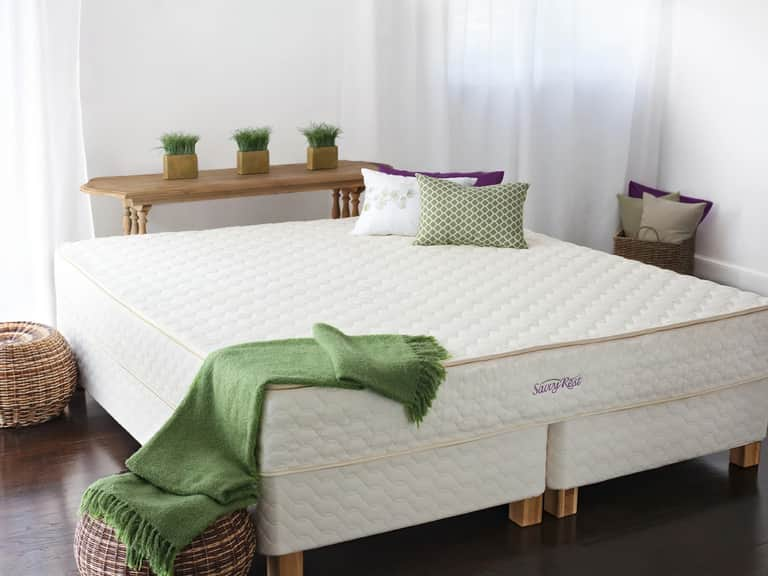
As one example of a layered design, the Savvy Rest Serenity Latex Mattress is described as a 10-inch mattress with three customizable Dunlop and/or Talalay latex layers, an organic cotton casing, and organic wool quilting. The product information identifies certified organic Dunlop latex and describes organic certification of the rubber tree plantations under USDA standards and processing under the Global Organic Latex Standard (GOLS). Those claims apply to the specified materials; a reader should still consult the current product documentation for the precise scope of certification and available configurations. The example illustrates why a detailed component list is more useful than a general “organic” headline.
Wool and cotton: the layers closest to the sleeper
Wool often appears in mattress quilting or as a separate topper or pad. It can contribute a gently cushioned feel and is valued for its ability to absorb and release moisture. How much these qualities matter depends on the amount of wool, the structure of the surrounding layers, the room’s conditions, and the person sleeping there. Wool is not a temperature-control switch, nor does a natural fiber guarantee that a bed will feel cool to every sleeper.
Some mattress makers use wool as part of a fire-barrier system. That role should not be confused with an organic claim: the relevant questions are what the wool is, how it was sourced and processed, and which certifications, if any, apply. If you are sensitive to wool’s characteristic scent or texture, ask about the construction and whether the material is enclosed within the mattress or present in a removable layer.
Cotton is commonly used in covers, quilting, and fitted bedding. Its feel changes with the weave, weight, and finishing, and its usefulness depends partly on how it is maintained. An organic cotton cover is a statement about a fiber and its certified status, not a guarantee that the entire mattress is organic. The same distinction applies to pads and toppers: a certified cotton cover does not automatically mean the fill or every other component has the same certification.
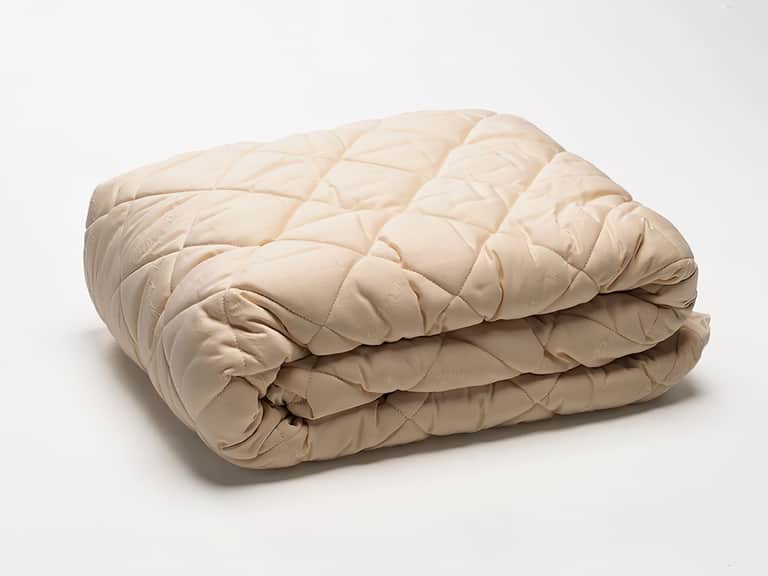
A separate wool pad can be a way to alter the surface without replacing the mattress. For instance, the Suite Sleep Washable Wool Mattress Pad is described as having an organic cotton cover and super-washed natural wool fill, with a fitted design and an 18-inch pocket. Its care instructions call for machine washing in cold water and low-temperature drying or hanging to dry. That is a product-specific feature, not a general property of all wool bedding: many wool-filled products require different care, including professional cleaning. Read the label before choosing a layer you expect to wash regularly.
What certifications can—and cannot—tell you
Certification names are most useful when they are treated as evidence with a defined scope, rather than as a general seal of virtue. Standards differ in what they assess. Some focus on whether agricultural fibers or latex meet organic requirements; others address chemical testing, emissions, or the environmental and social conditions of production. A certificate for one material does not automatically certify the finished mattress in its entirety.
For latex, GOLS—the Global Organic Latex Standard—is a certification readers may encounter when evaluating organic latex products. It concerns organic latex and sets requirements for certified materials and processing. If a company cites GOLS, check which latex component is covered and whether the claim can be confirmed through current documentation. Do not assume that a standard covering latex also applies to a cotton cover, a wool layer, or the whole assembled mattress.
For textile components, GOTS—the Global Organic Textile Standard—is another name that may appear in the bedding market. It addresses certified organic fibers and specified processing requirements for textiles. Again, the relevant question is scope: which textile or component is certified, and does the certificate belong to the material or finished product being discussed? A certificate or transaction document, where available, offers more clarity than a logo reproduced without explanation.
Other labels may address different matters. A chemical-emissions or restricted-substance standard is not necessarily an organic certification. It may provide useful information about a defined set of chemical limits, but it answers a different question. Likewise, a manufacturer’s statement that a material is “natural” may be informative, but it is not equivalent to independent verification. The label should tell you what was assessed, by whom, and for which part of the product.
- Identify the certified component. Is the claim about latex, cotton, wool, the cover, or the complete mattress?
- Ask for the standard’s name. Specific standards are easier to evaluate than broad claims such as “eco-certified.”
- Check the certificate’s scope and currency. Certification can apply to a facility, material, or product category, and may change over time.
- Separate organic status from other attributes. Organic sourcing, emissions testing, durability, and recyclability are distinct considerations.
- Look for a complete material list. A certificate does not replace disclosure of the product’s full construction.
Certification is not a prediction of comfort, longevity, or sleep quality. It is a way to verify a defined claim. The distinction may seem almost bureaucratic, but it prevents a label from being asked to do more than it can. A carefully certified material can still be unsuitable for a particular sleeper; a comfortable mattress can still leave questions about what its marketing language means.
Comfort is a construction question—and a personal one
People often ask whether a mattress is soft or firm as if the answer were fixed. In reality, the sensation depends on body weight, shape, preferred sleeping position, and the support system beneath the top layers. A surface that feels plush to one person may feel insufficiently supportive to another. A partner may experience a shared bed differently, especially when needs or preferences diverge.
Instead of treating a firmness label as a verdict, think about the experience you want. Do you prefer to feel cradled close to the surface, or to lie more on top of it? Are there pressure points that become uncomfortable on your current mattress? Does your present bed feel too yielding, too hard, or simply uneven? These observations are not a diagnosis; they are a practical record of what you might want to test in a new design.
Layered mattresses offer one route to adjustment. In a model with interchangeable layers, changing their order or firmness may alter the feel without replacing the whole mattress. Some models allow different configurations on each side of a larger bed, which can help couples with differing preferences. But customization adds decisions, and an abundance of combinations can turn shopping into a small administrative project. Ask for a clear explanation of the available arrangements, exchange terms, and any limits on customization before you commit.
Whenever possible, test the mattress in the position in which you actually sleep. Give yourself enough time to notice pressure and support rather than judging from the first few seconds. If testing in person is not practical, examine the trial period, return process, warranty exclusions, and shipping arrangements. A “comfort guarantee” is only as useful as its terms.
Care, durability, and the life of the bed
Care is part of choosing a sleep surface because materials do not all ask the same of their owners. A zippered cover may be removable but not machine washable. Wool might be enclosed in a mattress, placed in a washable pad, or sold in a product that calls for dry cleaning. Latex layers may be rearrangeable while the outer casing requires spot cleaning. The word “natural” does not tell you how to clean any of them.
Before buying, check whether the cover can be removed, what cleaning is allowed, whether the mattress can be rotated, and whether a protector is recommended. Confirm the foundation requirements as well: an unsuitable base can affect the way a mattress sits and may complicate warranty coverage. If the product includes a trial or layer-exchange policy, read the conditions, time limits, and costs carefully.
Durability is shaped by materials, construction, use, and care. No broad claim about latex or wool can guarantee how long a particular mattress will remain comfortable. A warranty may cover a defined defect while excluding ordinary softening or changes in comfort. Read the warranty as a contract, not as a forecast of the mattress’s useful life.
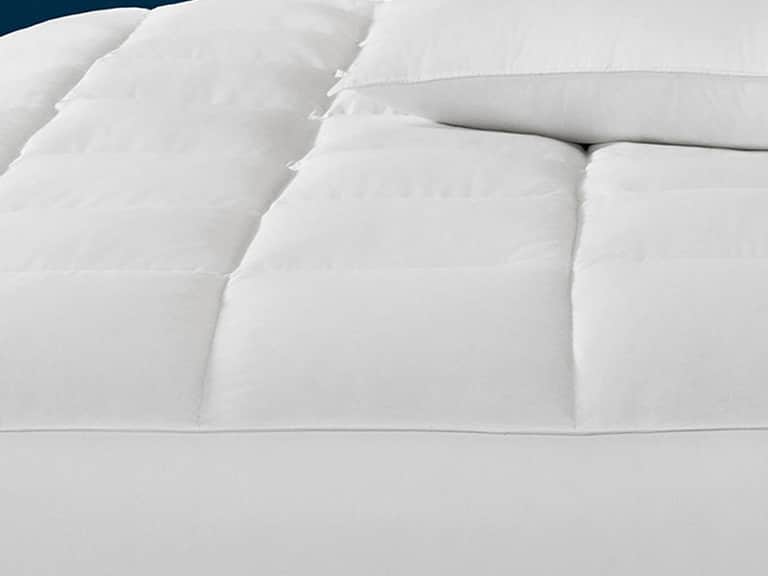
It is also worth considering the surrounding bed. A breathable, well-made mattress cannot compensate for a room that is persistently too warm, an ill-fitting sheet that bunches, or a pillow that does not suit the sleeper. A mattress pad may add cushioning or help protect the surface, but a thick pad can also change the feel of the mattress beneath it. The complete sleep surface is a system, and each layer contributes its own material and maintenance needs.
A practical way to compare options
When several organic mattresses seem similar, write down the differences instead of trying to hold a parade of labels in your head. A simple comparison can include the material in each layer, the certification and its scope, the feel, the available sizes, care instructions, and the terms for returns or exchanges. Note what remains unknown. A company’s willingness to answer a specific question is itself useful information.
- List your priorities. Decide whether your main concern is firmness, natural materials, ease of care, adjustability, or another practical feature.
- Map the materials. Record the support core, comfort layers, cover, quilting, and any protector or pad you plan to use.
- Verify the claims. Match each organic or safety claim to a named standard and a specific component.
- Test the feel. Try the surface in your usual sleeping positions, or understand the trial and return terms before ordering.
- Imagine ordinary upkeep. Make sure the cleaning instructions and mattress weight or setup are realistic for your household.
This method does not promise a perfect bed. It does, however, make it less likely that a polished phrase will decide for you. A good choice is usually the one whose construction you understand, whose feel you can tolerate or enjoy, and whose care fits the life you actually lead.
Questions worth asking before you choose
Consumers do not need to become textile chemists or mattress engineers to make a thoughtful decision. They do need enough information to distinguish a verified material claim from a broad impression. If product descriptions are vague, ask direct questions and request answers in writing. Useful questions include:
- What are the materials in every major layer, from the support core to the outer cover?
- Which specific components are certified organic, and under which standard?
- Can the certification documentation be reviewed, and does it apply to the product being sold?
- What is the mattress’s feel likely to be in the configuration I am considering?
- What are the cleaning instructions, and is the cover washable?
- Can layers be exchanged or rearranged, and what fees or time limits apply?
- What does the warranty cover, and what foundation does the manufacturer require?
The answers should be specific enough to help you compare. “Made with natural materials” may be a beginning, but it is not a material list. “Certified organic” may be meaningful, but only when you know what was certified. Transparency does not make one mattress right for everyone; it makes the decision less dependent on guesswork.
The sensible meaning of “better”
There is a temptation to treat an organic sleep surface as a moral achievement: the bed with the purest-sounding vocabulary must be the best one. That is too easy, and too vague. A more useful definition of “better” is particular. Better for which sleeper, in which room, with which comfort needs, under which standards, and with what capacity for care?
Natural latex, wool, and cotton can each contribute distinct qualities to a mattress or bedding layer. Certification can help clarify sourcing and processing claims, provided its scope is understood. Construction determines how materials work together, while comfort remains an individual judgment made through experience, not a seal on a tag. These are separate strands; a good comparison keeps them separate long enough to see how they meet.
In the end, a sleep surface is neither a scientific instrument nor merely a bundle of slogans. It is a daily object, intimate in use and surprisingly complicated in manufacture. Choose with curiosity rather than urgency. Read the fine print, ask what is inside, and give comfort the same attention you give the label. The most reassuring product description is the one that leaves you with fewer unanswered questions.